
Logo and lockups
Primary, secondary, mark-only, horizontal, stacked, light, dark and one-color files for real-world use.
A logo is one asset. A brand kit is a small decision system for everyone who builds your pages, proposals, signs, posts and uniforms. The value is in the decisions you stop remaking.
MORE THAN A LOGO
This scope works for a new business preparing to launch, an established company whose materials no longer look related, or a team about to invest in a new website.
It is not a naming project, a research-led brand strategy, or packaging across a large catalog. Those are scoped separately, and we will say so.
WHAT IS INCLUDED
Primary, secondary, mark-only, horizontal, stacked, light, dark and one-color files for real-world use.
Primary, secondary, neutral and accent values for web and print, with contrast-aware pairings so buttons and text stay readable.
Display and body pairings, hierarchy, scale, weights and fallbacks for web and documents.
Positioning notes, tone rules, sample headlines, button language and examples of what to avoid.
A USABLE HANDOFF
Delivery is organized by logo variation and use case, with practical names instead of a folder full of unexplained exports.
What is in the folder
Typical delivery
What the guide answers
In plain English
A brand still needs stewardship. When a new format appears, the guide lets you extend the system without starting over.
FROM DISCOVERY TO HANDOFF
01
Audience, positioning, competitors, references, personality and every place the brand must show up.
02
Focused directions with rationale, not a pile of disconnected logo options.
03
The chosen direction tightened across logo, palette, typography, spacing and sample applications.
04
Final files, usage guide, starter assets and sensible naming.
INVESTMENT & TIMING
$499to $899
Mark only
When the logo is the only thing that needs deciding right now.
$1,500and up
This page
Logo, colors, type, voice and the rules that hold them together.
Scoped
Put it to work
The kit moves straight into a site build, so the identity launches finished.
Web and print formats are included as defined in your proposal.
USEFUL INPUTS BEFORE DESIGN BEGINS
No. It includes enough positioning and voice work to support strong identity decisions. Research, naming, architecture and a larger strategic engagement should be scoped separately when needed.
Yes, when they still serve the business. Discovery identifies what customers recognize, what works in practice and what is creating inconsistency.
Usually, if the identity is changing. The website can then use the approved visual and verbal system from the start instead of redesigning those decisions during the build.
Yes. Final delivery includes web and print formats, plus guidance for vendors.
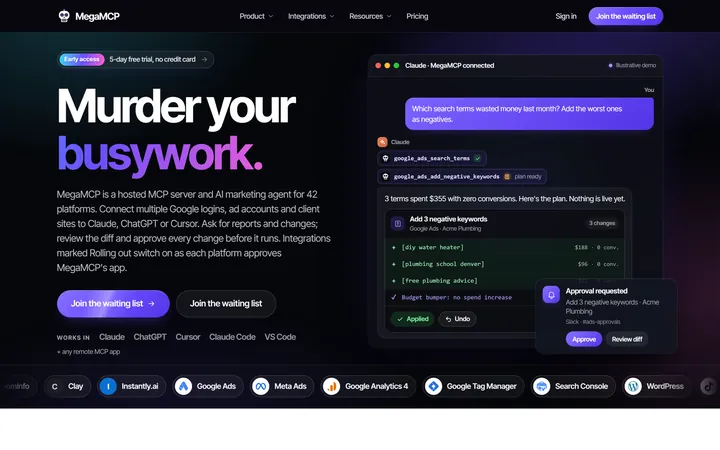
A brand with a voice, a live product demo, flat pricing and a page for every integration.
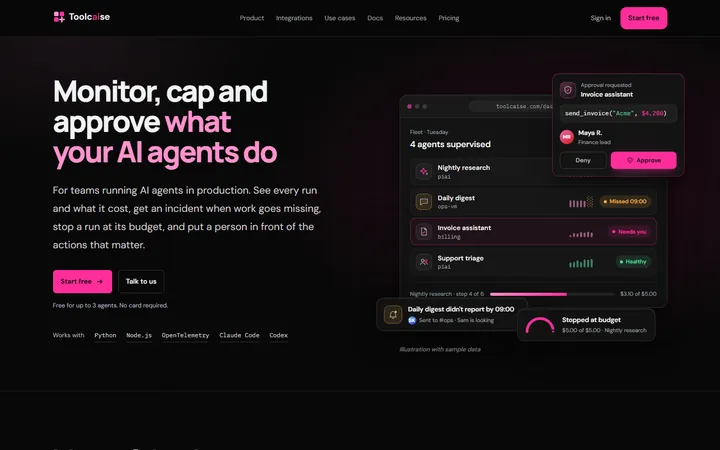
Product illustrations, pricing a team can compare and a resource library.
Real projects, with the context and decisions explained. Explore all our work.